

Cable ties are simple components, but they have an important role in electrical panel organisation. They keep power cables, control wires, instrumentation circuits and communication lines arranged in planned routes. Proper bundling also makes circuits easier to identify, inspect and maintain.
Dollex Control Panel Accessories provides cable-management products for panel builders, electrical contractors, machinery manufacturers and industrial users. The most suitable cable tie depends on the bundle size, operating temperature, exposure conditions and required tensile strength.
Standard Nylon Cable Ties
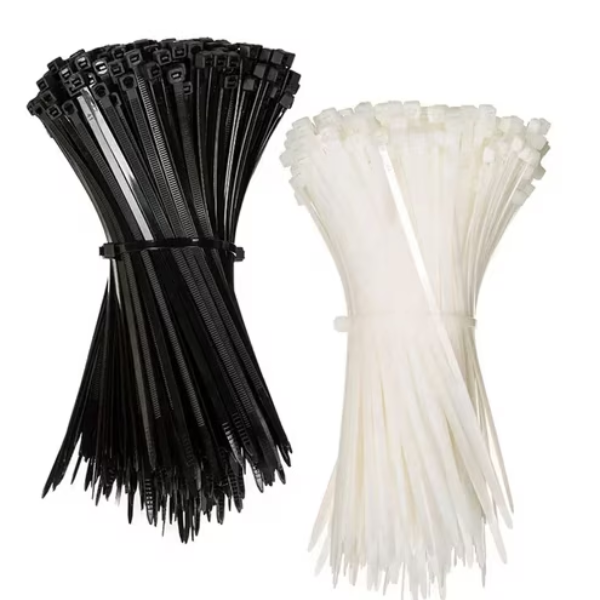
Nylon cable ties are commonly used for indoor wiring because they are lightweight, easy to install and available in many sizes.
Typical applications include:
- Control-panel wiring
- Electronic equipment
- Commercial electrical installations
- Server and telecom cabinets
- Light-duty machinery
- General cable bundling
The tie should be strong enough to support the bundle without being excessively wide or rigid.
UV-Resistant Cable Ties
Ordinary nylon can weaken after prolonged exposure to sunlight. UV-resistant cable ties contain stabilising additives that improve their outdoor performance.
They are suitable for rooftop equipment, solar installations, outdoor cable routes and exposed machinery. Although these ties are usually black, buyers should confirm their UV resistance from the product specification rather than relying on colour alone.
Stainless-Steel Cable Ties
Stainless-steel cable ties provide higher tensile strength and better resistance to heat, chemicals and demanding industrial conditions. They are used in heavy machinery, process plants and installations where nylon ties may become brittle or weak.
Coated stainless-steel ties create a protective layer between the metal and the cable. This can help reduce abrasion in vibration-prone applications.
Releasable Cable Ties
Releasable ties can be opened and reused, making them useful for temporary wiring, prototype panels and systems that require frequent modifications.
Their locking strength and environmental rating should be reviewed before they are selected for permanent or load-bearing applications.
Cable Tie Requirements for Panels Installed in Delhi
Electrical panels in Delhi may be exposed to high ambient temperatures, dust and changing humidity levels. Cable ties installed close to contactors, transformers, drives or power supplies must be capable of handling the surrounding heat.
Depending on the application, ties may also need resistance to:
- Ultraviolet radiation
- Oil and industrial chemicals
- Continuous vibration
- Flame propagation
- Moisture
- Heavy mechanical loads
Nylon cable ties should also be stored correctly. Prolonged exposure to excessively dry or hot storage conditions may reduce their flexibility.
Best Practices for Cable Bundling
Cable ties should support wires without cutting into their insulation. Installers should follow these practices:
- Avoid overtightening the tie around the bundle.
- Keep power and data cables separated where required.
- Do not force cables into sharp bends.
- Support heavy bundles at suitable intervals.
- Choose flame-retardant ties where panel standards require them.
- Use coated or rounded-edge ties for sensitive cable insulation.
- Cut excess tails flush to prevent sharp edges.
- Leave enough space for inspection and future modifications.
A flush-cutting tool produces a cleaner edge than an ordinary cutter and helps reduce injury risks during maintenance.
Supporting Better Panel Maintenance
Organised wiring allows technicians to identify circuits and replace components more efficiently. Cable markers, wiring ducts and planned routing should be used alongside cable ties.
Ties should hold cables in their intended positions without blocking panel fans or restricting airflow around heat-producing equipment. Correctly chosen cable ties improve wiring clarity, protect cable insulation and make electrical panels easier to service.