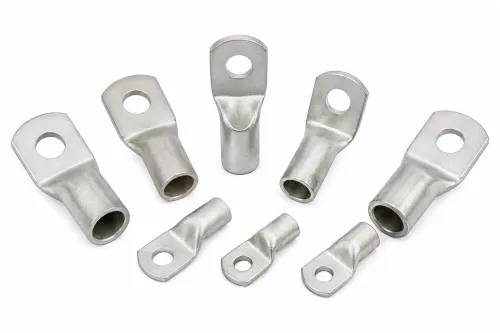


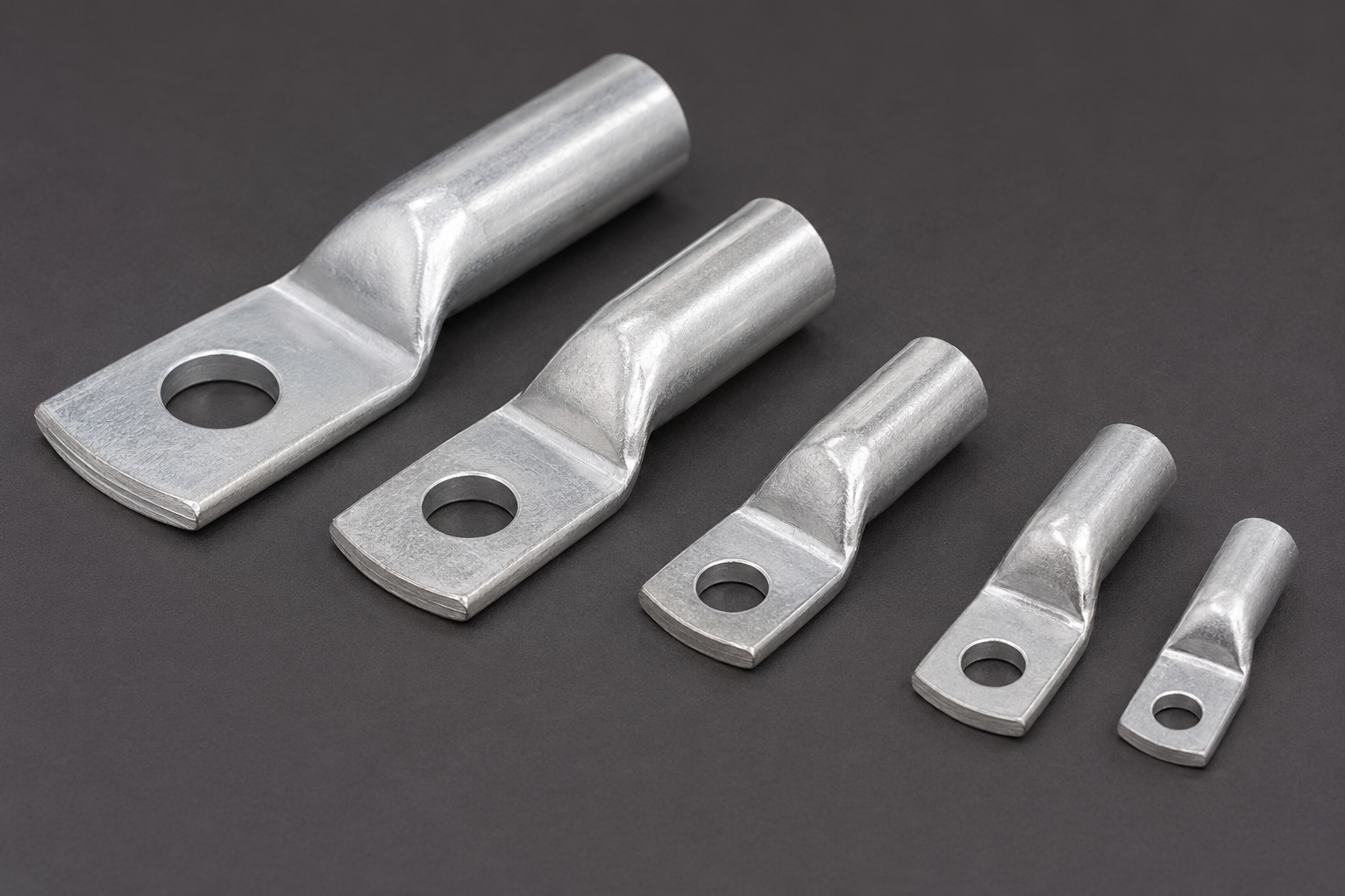
Aluminium cable lugs provide an economical and lightweight method of terminating larger aluminium conductors. They are widely used in power distribution panels, switchgear assemblies, utility installations and industrial electrical systems.
Despite their benefits, aluminium terminations require careful preparation. Aluminium naturally develops an oxide layer when exposed to air. If this layer, the lug size or the crimping method is not handled correctly, the termination may develop high resistance and excessive heat.
Dollex Control Panel Accessories manufactures and supplies components used by panel builders, contractors and industrial electrical teams. Avoiding common installation mistakes can significantly improve the working life of aluminium cable lugs.
Mistake 1: Selecting the Lug by Appearance
A lug should never be selected simply because the cable appears to fit inside its barrel. The barrel must correspond to the exact cross-sectional area of the aluminium conductor.
An oversized barrel may remain loose after crimping. An undersized barrel may damage the strands or prevent full insertion. Installers should check the cable marking and technical specifications before selecting the lug.
Mistake 2: Ignoring Aluminium Oxidation
Aluminium oxide conducts electricity less effectively than the base metal. Crimping a heavily oxidised conductor without proper preparation can create an unreliable connection.
The conductor should be cleaned using the recommended procedure. A suitable jointing compound may also be applied where specified to reduce further oxidation. Excessive scraping or removing strands to make the cable fit should always be avoided.
Mistake 3: Joining Aluminium Directly to Copper
Direct contact between aluminium and copper may cause galvanic corrosion, particularly when moisture reaches the joint. This can gradually weaken the termination and increase electrical resistance.
When an aluminium conductor must be connected to a copper busbar, a bimetallic lug is usually the correct choice. Its aluminium barrel accommodates the cable, while its copper palm provides a compatible connection to the copper terminal.
Environmental Challenges for Aluminium Lugs in Delhi
Delhi experiences high summer temperatures, considerable dust and seasonal humidity. These factors can add stress to electrical terminations, particularly in outdoor panels, factories and utility installations.
Reliable performance requires attention to:
- Proper enclosure sealing
- Protection from moisture and dust
- Correct cable support
- Recommended bolt-tightening torque
- Adequate panel ventilation
- Periodic thermal inspection
A minor installation fault can become more serious when the connection carries a continuous high load in a warm environment.
Mistake 4: Using the Wrong Crimping Die
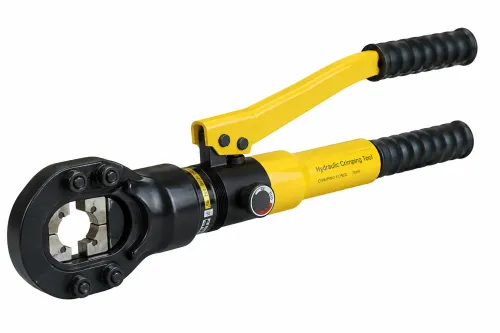
The crimping die must match the lug size, conductor size and required crimp profile. An incorrect die may produce a joint that looks compressed but lacks adequate contact pressure.
Poor crimping can result in:
- Loose cable retention
- Damaged conductor strands
- Barrel deformation
- High contact resistance
- Abnormal terminal temperature
The specified number and sequence of crimps should also be followed.
Mistake 5: Applying Incorrect Tightening Torque
An undertightened bolt may loosen because of vibration or repeated heating and cooling. Overtightening can deform the lug palm, damage the terminal or weaken the fastener.
Where a torque value is provided, a calibrated torque wrench should be used. Connections should be inspected during planned maintenance rather than repeatedly tightened without measurement.
Discolouration, melted insulation, a burnt smell and unusual heat are warning signs of a failing termination. Correct sizing, surface preparation and crimping help aluminium cable lugs deliver safe and dependable service.