

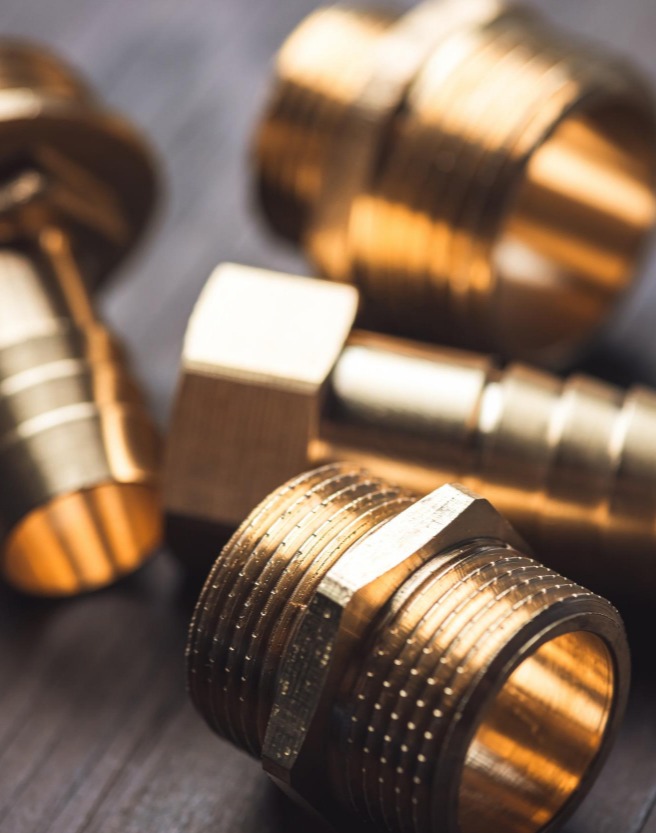
Cables entering an electrical enclosure need more than a simple opening in the panel wall. Without an appropriate cable entry component, movement, pulling forces, dust, moisture, and installation stress can affect the cable and enclosure. Brass cable glands are widely used to create organised, mechanically secure cable entries in industrial electrical systems.
Understanding what a cable gland actually does helps panel builders and installers choose the right configuration for each application.
What Does a Brass Cable Gland Do?
A cable gland provides mechanical support at the point where a cable enters equipment or an enclosure.
Depending on the gland design and installation requirements, it can help with:
- Cable retention
- Strain management
- Entry sealing
- Cable organisation
- Mechanical protection
- Maintaining enclosure integrity
Cable glands are commonly installed on control panels, junction boxes, electrical enclosures, machinery, distribution equipment, and industrial automation systems.
Why Brass Is Commonly Used
Brass offers useful mechanical properties for electrical accessory applications and can be manufactured accurately into threaded components.
Different finishes or configurations may be available depending on the installation environment. Selection should always consider the cable type, enclosure, environmental exposure, and project specification rather than assuming one gland fits every application.
Cable Diameter Requires Careful Checking
Cable glands are normally selected according to the cable dimensions they are designed to accommodate.
Choosing an excessively large gland may prevent proper gripping or sealing. Selecting one that is too small can make installation impossible or damage the cable.
Before ordering, confirm the actual cable dimensions rather than relying only on general cable descriptions.
Thread Type Must Match the Enclosure
The gland must also fit the cable entry provided on the electrical enclosure.
Panel manufacturers should verify thread specifications and entry-hole arrangements during the design stage. This reduces modification work during final assembly.
It is especially important for OEMs producing repeated machinery or control panel designs, because standardising cable-entry specifications can simplify procurement and production.
Consider the Installation Environment
A cable gland used inside a clean commercial electrical room may face different conditions from one installed near industrial machinery.
Before selection, consider:
- Dust exposure
- Moisture
- Mechanical vibration
- Cable movement
- Indoor or outdoor placement
- Temperature conditions
- Required enclosure protection
- Cable construction
Where a project has defined ingress-protection requirements, the complete cable-entry arrangement should be assessed accordingly.
Installation Quality Still Matters
Even a correctly specified gland can perform poorly if installed carelessly.
Installers should make sure the gland is correctly assembled, securely fitted, and appropriately tightened without damaging the cable. Unused enclosure openings should also be managed according to the enclosure design requirements.
A final visual inspection can reveal loose fittings, incorrect cable positioning, or poorly organised entries.
Better Cable Entry Improves Panel Workmanship
Well-planned cable entry contributes to a cleaner panel layout and can simplify future inspection or maintenance.
For control panel builders working across Delhi's commercial and industrial sectors, this becomes particularly valuable when panels contain numerous incoming control, power, and instrumentation cables.
Dollex Control Panel Accessories supplies electrical panel accessories for such applications. When evaluating brass cable glands, installers should focus on cable diameter, thread compatibility, environmental requirements, enclosure design, and installation quality. Correct selection helps turn a basic cable opening into a properly managed electrical entry point.