Automated machines need reliable information about the position or movement of mechanical components. Limit switches provide a practical electromechanical method of detecting physical movement at defined points, allowing a control system to respond accordingly.
They are widely used in machinery, material-handling equipment, industrial automation, and control systems where physical position needs to trigger an electrical action.
How a Limit Switch Works
A limit switch is mechanically actuated when a moving machine component reaches a particular position.
That physical contact changes the state of electrical contacts inside the switch. The resulting signal can then be used by the control circuit for functions such as stopping movement, changing sequence, confirming position, or initiating another machine action.
Common Industrial Applications
Limit switches can be found in:
- Conveyor systems
- Packaging machinery
- Machine tools
- Material-handling equipment
- Doors and gates
- Hoisting equipment
- Automated production systems
- Special-purpose machinery
Their relatively straightforward operating principle makes them useful across many machine designs.
Actuator Type Influences Selection
Different machine movements require different ways of physically operating the switch.
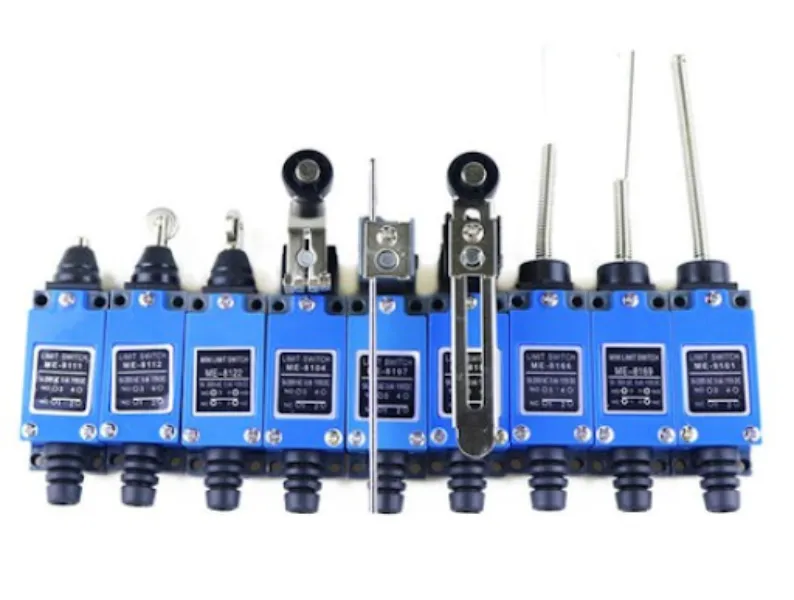
Depending on the application, limit switches may use plungers, rollers, levers, or other actuator arrangements.
A machine designer should consider the direction of movement, available mounting space, travel distance, operating frequency, and physical contact point.
Selecting an actuator simply because it fits physically may not produce reliable long-term operation.
Contact Configuration Matters
The electrical contact arrangement should suit the intended control circuit.
Designers need to understand what should happen when the switch is actuated and how the control logic interprets the resulting contact state.
This is particularly important where the switch contributes to sequencing or equipment interlocking.
Watch for Mechanical Misalignment
A common machine-maintenance issue is incorrect actuator alignment.
If a moving component strikes the switch too aggressively, the device may experience unnecessary mechanical stress. If contact is insufficient, operation may become intermittent.
Maintenance personnel should therefore inspect the physical interaction between the machine and switch rather than troubleshooting only the electrical wiring.
Environment Can Affect Reliability
Industrial machines may operate around dust, oil, vibration, moisture, or repeated mechanical movement.
The switch construction and enclosure characteristics should be appropriate for the intended location. Cable entry and mounting quality should also be considered because the overall installation influences reliability.
Replacement Requires More Than Physical Similarity
When replacing a failed limit switch, maintenance teams should avoid selecting a new unit based solely on shape.
Check:
- Electrical ratings
- Contact configuration
- Actuator design
- Mounting dimensions
- Operating movement
- Environmental suitability
- Connection arrangement
Delhi has a substantial machinery manufacturing, electrical panel, and industrial maintenance market where replacement components are frequently required to minimise equipment downtime.
Dollex Control Panel Accessories supports these applications with electrical and automation products for machine-control requirements. A properly selected limit switch provides a simple yet effective way to convert physical machine movement into usable electrical control information.
For OEMs and maintenance teams, careful attention to actuator geometry, contact arrangement, mounting, and operating conditions can make position detection more dependable throughout the machine's service life.
Keywords