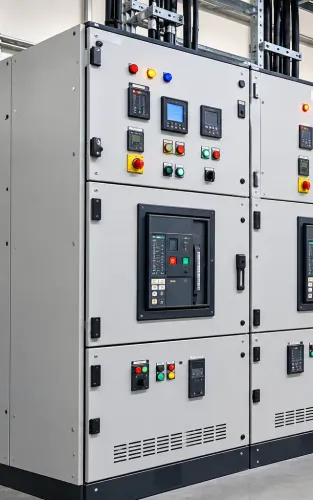
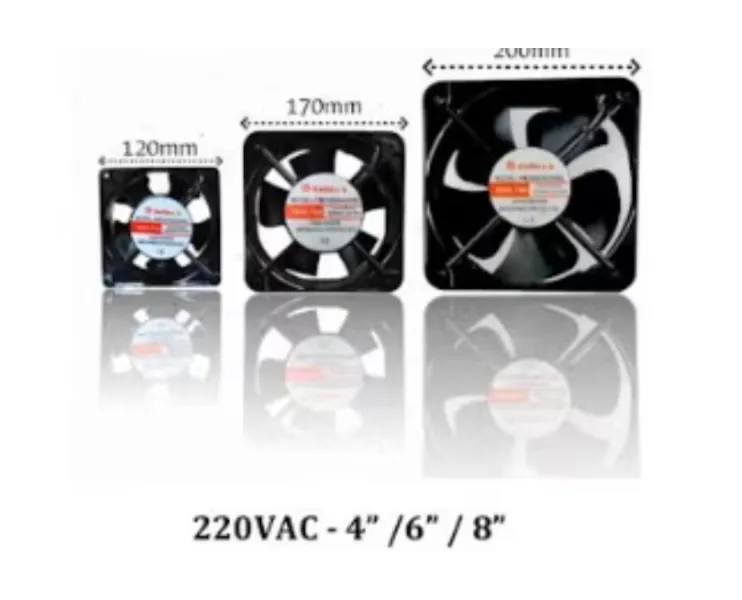
Heat is a persistent challenge inside electrical enclosures. Power supplies, drives, transformers, contactors, relays, and other components can generate heat during operation, while a closed enclosure limits natural air circulation. Panel fans are commonly used to support airflow where the enclosure design permits ventilated cooling.
Choosing a fan based only on its physical dimensions, however, can lead to disappointing thermal performance.
Why Control Panels Become Hot
Electrical components generate varying amounts of heat during operation.
Internal temperature can rise further because of:
- High ambient temperature
- Dense component placement
- Limited enclosure space
- Restricted ventilation
- Continuous equipment operation
- Dust accumulation around airflow paths
- Nearby heat-producing machinery
Delhi's summer conditions can make thermal planning especially relevant for electrical panels installed in non-air-conditioned industrial areas.
Start With the Heat Load
Panel cooling should ideally be considered during design rather than after overheating occurs.
Designers should evaluate the enclosure size, estimated internal heat generation, ambient temperature, permissible component temperatures, and airflow requirements.
A fan cannot reduce incoming air below ambient temperature, so applications requiring lower internal temperatures may need a different cooling approach.
Airflow Needs a Defined Path
Installing a fan without considering how air enters and leaves the enclosure may produce poor circulation.
A practical airflow arrangement should encourage cooler air to pass across heat-producing components before warmer air exits.
Component positioning can therefore influence cooling effectiveness.
Filters Require Maintenance
Where filtered ventilation is used, the filter helps reduce the entry of airborne contamination. Over time, however, accumulated dust can restrict airflow.
Maintenance schedules should include inspection and cleaning or replacement of filtration components where applicable.
A fan that appears to be operating normally may still provide insufficient effective airflow if its ventilation path is heavily blocked.
Check Fan Specifications Before Purchase
Industrial buyers should consider more than fan size.
Useful selection parameters can include:
- Operating voltage
- Airflow capacity
- Physical dimensions
- Mounting arrangement
- Power consumption
- Noise considerations
- Environmental suitability
- Compatible filter arrangement
The final selection should reflect the thermal requirements of the enclosure.
Avoid Treating Overheating as a Fan-Only Problem
If a panel repeatedly runs hot, simply installing a larger fan may not address the underlying cause.
Technicians should investigate whether vents are blocked, components are overloaded, heat-producing equipment is poorly positioned, filters are dirty, or the surrounding ambient temperature exceeds design assumptions.
This broader diagnostic approach can prevent unnecessary component replacement.
Choose Cooling Components Around Actual Conditions
Panel builders, automation professionals, and OEMs in Delhi frequently work with electrical enclosures installed in factories, workshops, commercial properties, and machinery environments.
Dollex Control Panel Accessories supplies panel-related components for these industrial requirements. Buyers evaluating panel fans should consider airflow requirements, voltage, enclosure layout, filtration, operating environment, and maintenance accessibility before making a selection.
Effective enclosure cooling is ultimately a system-design issue. A correctly specified fan, sensible airflow path, suitable filtration, and regular maintenance can work together to help electrical components operate within appropriate temperature conditions.
Keywords