

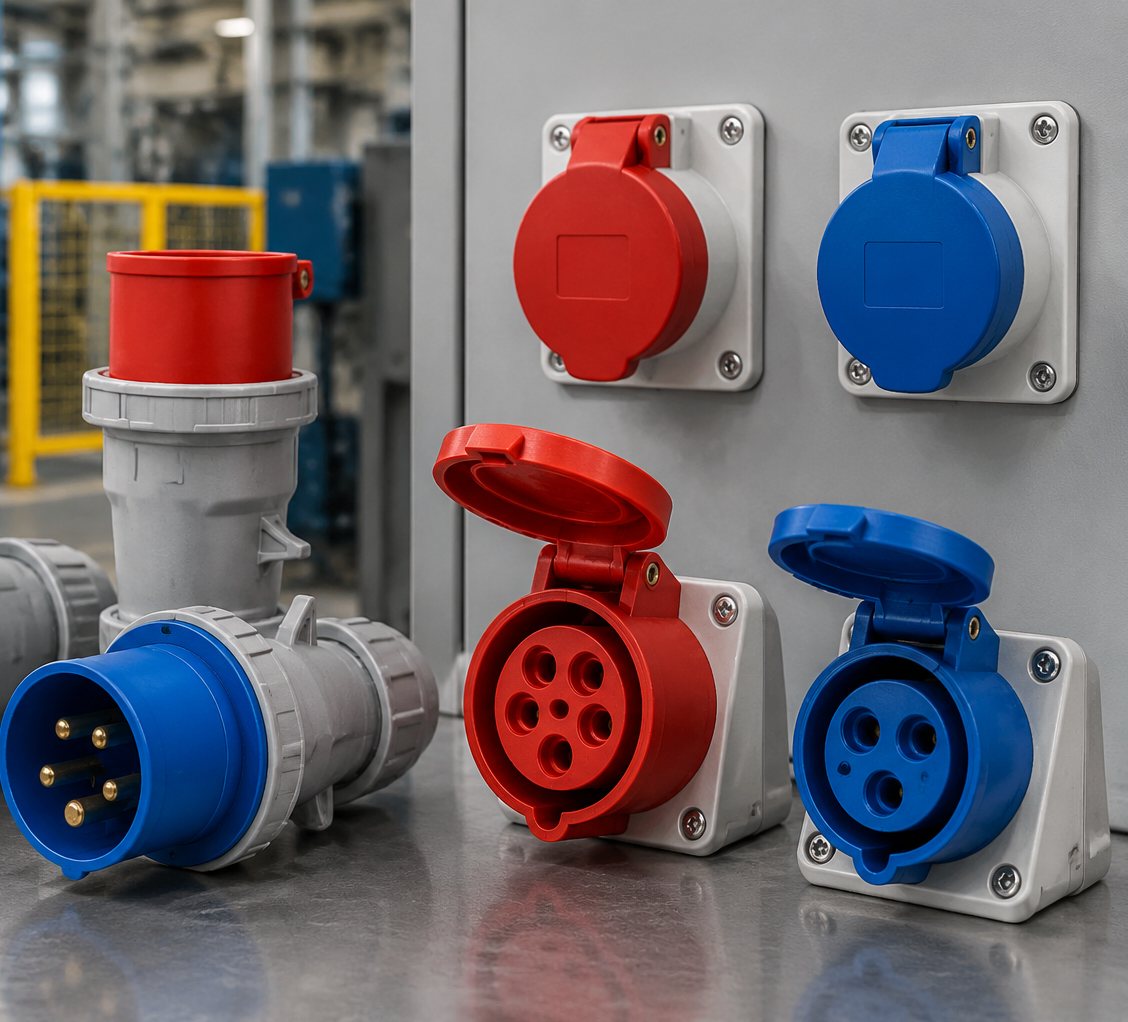
Industrial electrical connections often operate in environments where ordinary domestic-style connectors are unsuitable. Equipment may be moved regularly, exposed to demanding working conditions, or required to handle higher electrical loads. Industrial plugs and sockets are designed for these more demanding connection requirements.
Choosing them correctly requires attention to electrical ratings, physical configuration, environmental conditions, and application requirements.
Start With Electrical Ratings
Voltage and current requirements should be established before selecting a plug or socket.
Connecting equipment through an accessory that is not appropriately rated can create operational and safety concerns. Buyers should therefore check the equipment specifications and electrical system before deciding on a connector.
Important parameters include:
- Rated voltage
- Rated current
- Number of poles
- Frequency where relevant
- Earthing arrangement
- Applicable protection requirements
Electrical professionals should rely on verified product specifications rather than appearance alone.
Consider Where the Connection Will Be Used
A connector installed permanently inside a protected industrial building has different requirements from one used in a dusty workshop or exposed production area.
Potential conditions include:
- Dust
- Moisture
- Frequent connection cycles
- Mechanical impact
- Vibration
- Cable pulling
- Temperature variation
The selected industrial plugs and sockets should be appropriate for the actual environment.
Fixed Equipment Needs Differ From Portable Machinery
Application type also influences connector selection.
Portable machinery may require convenient disconnection because equipment is regularly relocated. Fixed industrial installations may prioritise secure connection and organised cable routing.
Manufacturing units, fabrication workshops, warehouses, construction-related businesses, and machinery manufacturers can therefore require different configurations even when electrical ratings appear similar.
Check Mechanical Compatibility
A technically suitable electrical rating is only part of the selection process.
The plug, socket, cable, mounting arrangement, and equipment interface should work together as a complete system. Cable dimensions should be compatible with the entry arrangement, while fixed sockets need suitable mounting locations.
Good planning prevents modifications during installation.
Inspect Connectors During Maintenance
Industrial connectors experience mechanical use as well as electrical loading.
Maintenance personnel should look for:
- Cracked housings
- Loose components
- Damaged pins
- Signs of overheating
- Cable-entry damage
- Contamination
- Poor engagement
Damaged connectors should be evaluated promptly rather than kept in service simply because equipment continues to operate.
Standardisation Can Simplify Industrial Operations
Facilities using many machines can benefit from standardising connector specifications where technically appropriate.
Standardisation may simplify replacement, spare inventory, technician familiarity, and maintenance planning. It can also reduce the risk of incompatible connectors being selected during urgent repairs.
For industrial buyers in Delhi, where manufacturing units, commercial facilities, workshops, and OEM operations may source electrical accessories regularly, product consistency can be an important procurement consideration.
Dollex Control Panel Accessories serves the electrical and automation market with components suited to industrial panel and power applications. When purchasing industrial plugs and sockets, buyers should focus on electrical ratings, application conditions, mechanical compatibility, construction, and expected frequency of use.
A connector should be selected as part of the electrical system rather than treated as an isolated accessory. That approach supports more dependable power connections throughout industrial operations.