

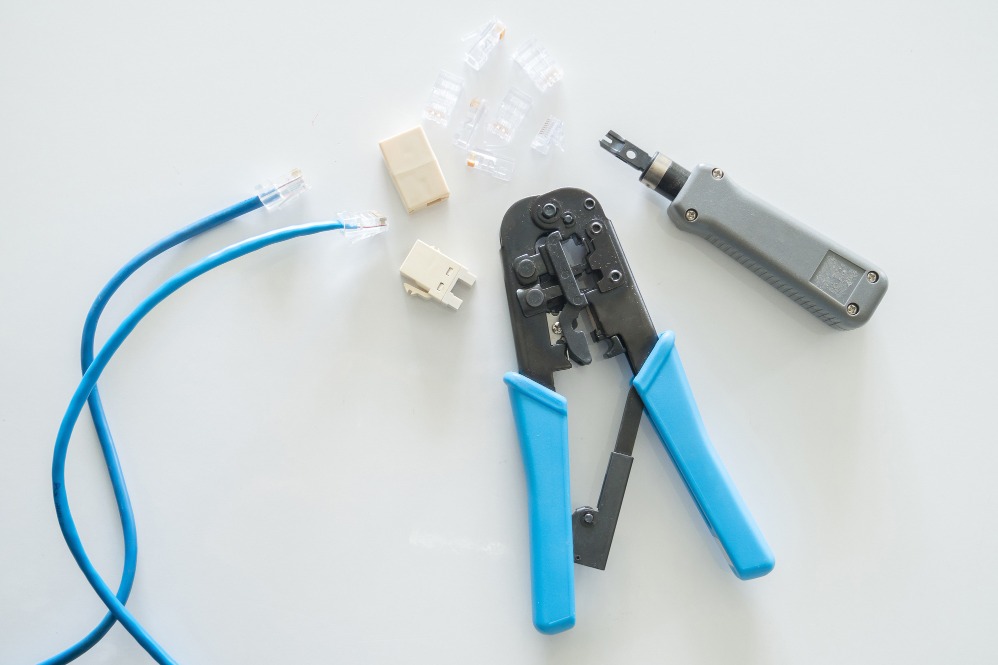
Manual crimping tools remain an important part of an electrician's toolkit because many control wiring and electrical termination tasks do not require hydraulic equipment. For smaller compatible terminals, a well-selected manual tool can provide portability, control, and convenient operation.
The key is understanding where manual crimping is appropriate and where a different tool should be considered.
When Manual Crimping Makes Sense
Manual tools are commonly useful for repetitive electrical assembly work involving terminals within the tool's specified capacity.
Applications can include:
- Control panel wiring
- Machine wiring
- Electrical maintenance
- Terminal preparation
- OEM assembly
- Commercial electrical work
- Workshop fabrication
Because they do not depend on a hydraulic mechanism or external power source, manual crimpers can be convenient for field technicians working across multiple locations.
Check the Crimping Range First
Not every manual crimping tool handles the same conductor or terminal sizes.
Before purchasing a tool, buyers should identify the termination sizes they use most frequently. A tool designed around the actual workload is generally more practical than selecting one simply because it offers a low purchase price.
The terminal type must also be considered. Different terminals may require different jaw profiles or crimping mechanisms.
Ratchet Mechanisms Can Improve Consistency
Some manual crimping tools use ratchet mechanisms that help control the crimping cycle.
This can be useful for repetitive assembly because the mechanism is designed to complete a defined compression sequence before releasing. However, users still need the correct terminal, conductor size, and tool specification.
A mechanical feature cannot compensate for an incorrectly matched connector.
Ergonomics Matter During Repetitive Work
For an electrician making only a few terminations, handle design may seem like a minor consideration. In a panel workshop where hundreds of connections may be prepared, it becomes much more significant.
Buyers should consider:
- Handle grip
- Required hand force
- Tool weight
- Jaw movement
- Ratchet operation
- Release mechanism
- Overall build quality
A comfortable tool can make repetitive work easier without sacrificing termination quality.
Know When Manual Equipment Is Not Enough
Trying to use a manual crimper beyond its intended capacity can result in poor connections and unnecessary operator strain.
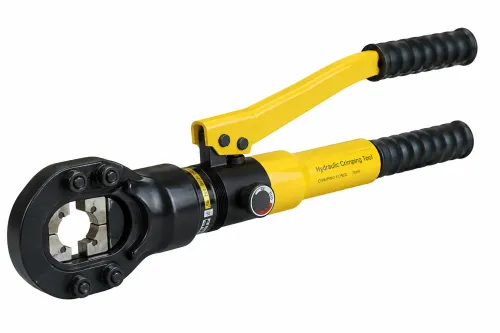
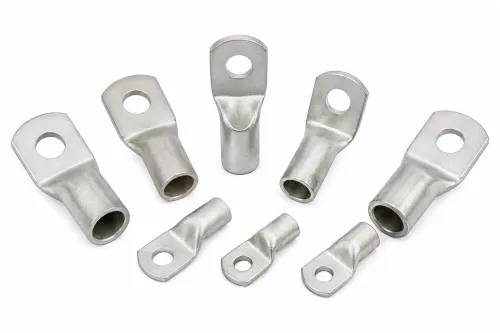
Larger cable lugs often require hydraulic crimping tools capable of producing substantially greater compression force.
For this reason, electrical workshops should select tools based on the full range of cables and terminals they routinely handle rather than expecting one crimper to perform every task.
Inspect Finished Terminations
After crimping, technicians should inspect the connector for visible problems.
Look for correct conductor insertion, appropriate crimp position, damaged insulation, excessive terminal deformation, or loose strands.
A simple inspection routine is particularly valuable for control panel manufacturers, where many terminations are completed before a panel reaches final testing.
Electrical contractors and OEMs in Delhi often require both portable tools for field installation and dependable workshop tools for repetitive panel assembly. Dollex Control Panel Accessories offers products relevant to these electrical applications.
When choosing manual crimping tools, consider terminal compatibility, crimping capacity, mechanism quality, ergonomics, and frequency of use. The best tool is not necessarily the most complex one; it is the tool that produces suitable, repeatable terminations for the actual electrical work being performed.