

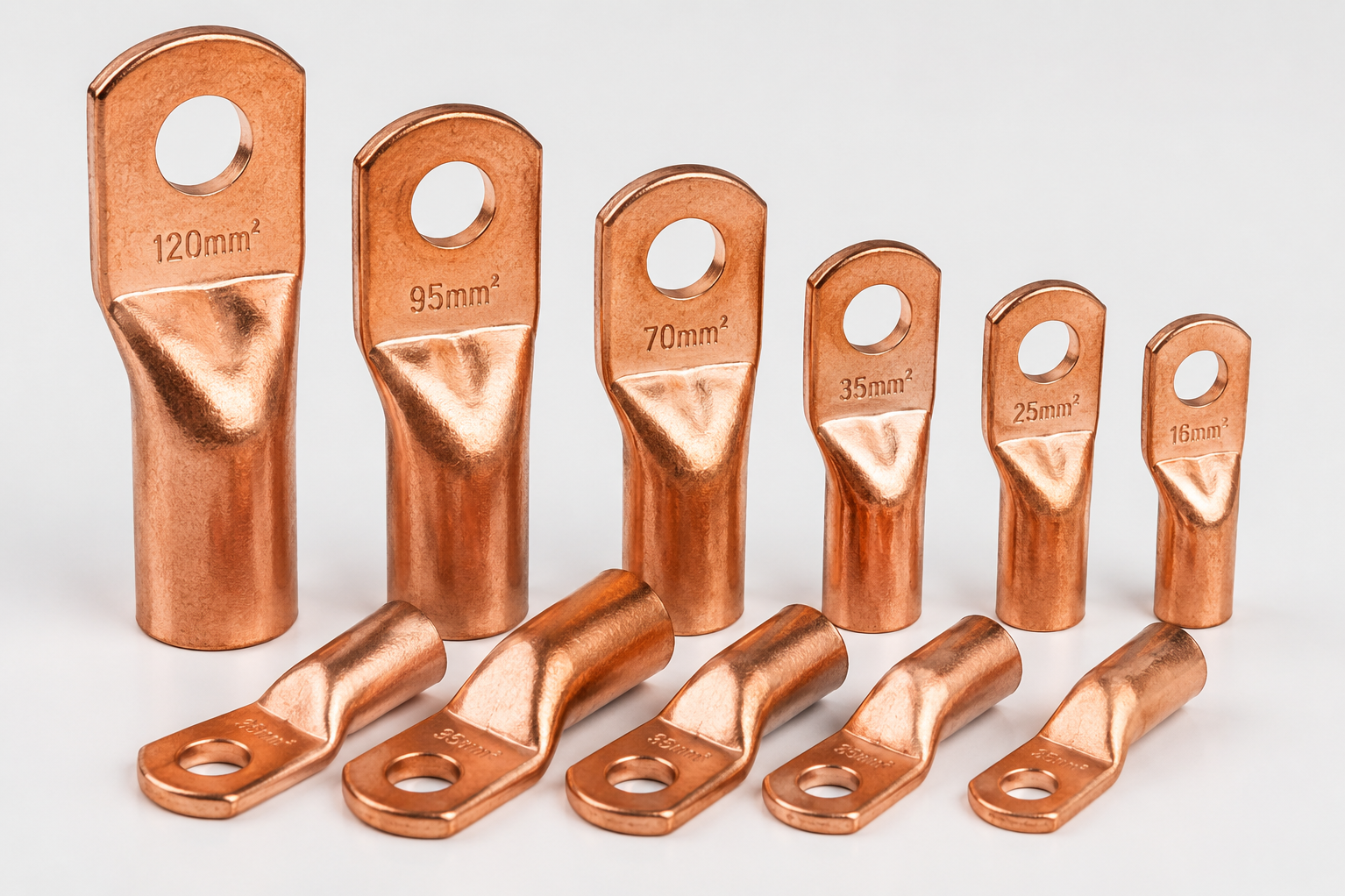
Copper cable lugs are essential for creating secure connections between electrical cables and equipment such as control panels, busbars, switchboards, circuit breakers and industrial machinery. The right lug supports stable current flow, while an incorrect or poorly crimped lug may lead to voltage drops, overheating and unexpected equipment failure.
Dollex Control Panel Accessories manufactures panel accessories for electrical contractors, panel builders, OEMs and industrial maintenance teams. When selecting copper cable lugs, buyers must consider the cable size, terminal dimensions, current load and operating environment.
How Copper Cable Lugs Work
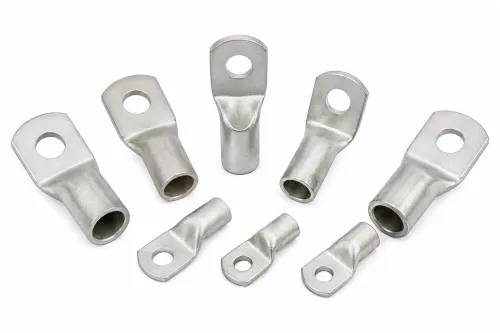
A copper cable lug has two main sections: a barrel and a palm. The stripped conductor is inserted into the barrel, which is then compressed using a suitable crimping tool. The palm is secured to a busbar, terminal or equipment stud with a bolt.
A correctly installed copper lug provides:
- Low electrical resistance
- Strong mechanical cable retention
- Consistent current transfer
- Reduced risk of terminal heating
- Easier inspection and maintenance
- Better protection against loose connections
Copper is widely used for cable terminations because of its high conductivity, mechanical strength and ability to handle varying electrical loads.
Common Types of Copper Cable Lugs
Ring-Type Lugs
Ring-type lugs have a closed circular palm that fits over a bolt or stud. They are commonly used in switchboards, control panels and industrial equipment because they cannot detach without removing the fastener.
Fork-Type Lugs
Fork or spade lugs can be installed without completely removing the terminal screw. They are generally suitable for smaller control wires and terminals that may require frequent servicing.
Pin-Type Lugs
Pin lugs convert stranded cable ends into compact pins. They are useful for contactors, terminal blocks, miniature circuit breakers and other components with narrow terminal openings.
Tubular Copper Lugs
Tubular lugs are used for medium- and high-current applications. Their strong barrel provides a dependable crimped connection when matched with the correct cable and die size.
Selecting Copper Cable Lugs for Delhi’s Industrial Conditions
Electrical panels in Delhi often operate in high ambient temperatures and dusty industrial surroundings. These conditions make proper material selection and installation particularly important.
Buyers should check:
- Cable size: The barrel must match the conductor’s cross-sectional area.
- Stud-hole size: The palm opening should fit the terminal bolt correctly.
- Current requirement: The lug must support the anticipated electrical load.
- Cable material: Copper lugs should normally be used with copper conductors.
- Surface finish: Tinned copper may be preferable in humid or corrosive environments.
- Crimping compatibility: The lug must match the available crimping tool and die.
An oversized lug may not compress properly, while an undersized lug can damage the strands or prevent complete cable insertion.
Why Tinned Copper Lugs Are Used
Copper can oxidise when exposed to moisture, industrial fumes and certain chemicals. Tin plating adds a protective surface that helps maintain reliable electrical contact.
Tinned copper lugs are commonly selected for outdoor panels, process industries and applications exposed to humidity. However, proper sealing, insulation and enclosure protection are still necessary.
Installation Practices That Improve Reliability
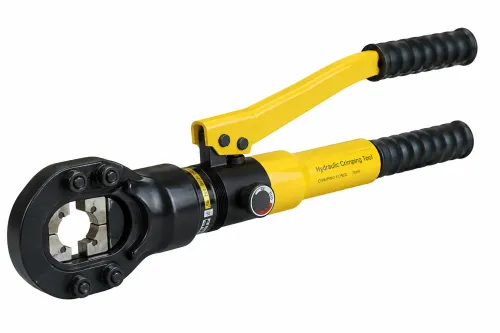
The conductor should be cut cleanly and stripped without damaging its strands. It must be inserted fully into the barrel before crimping. The installer should then use a manual or hydraulic crimping tool with the recommended die.
After crimping, the termination should be checked for cracks, movement, incomplete compression and exposed strands. Heat-shrink tubing or an insulating sleeve may be added where required.
A correctly selected and installed copper cable lug creates a durable termination, reduces unnecessary heating and supports reliable electrical panel performance.