A bimetallic lug is not required simply because an installation contains aluminium cable. You need one when an aluminium conductor must terminate on a copper connection surface and the selected terminal is not specifically identified for that material combination; by the end, you will know how to verify the metals, compare connector types and install the transition correctly.
Key takeaways
- Use a bimetallic lug when aluminium meets copper without a listed direct-connection rating.
- Check conductor metal, terminal material, lug markings, temperature rating and installation environment.
- Follow the lug’s specified stripping length, die code, crimp sequence and torque values.
- Inspect the finished connection for correct insertion, crimp position, sealing and secure terminal contact.
Use the material-and-termination rule before choosing a lug
An aluminium-to-copper connection requires a bimetallic lug when an aluminium conductor lands directly on a copper busbar or equipment terminal and the selected connector is not listed for that material combination.
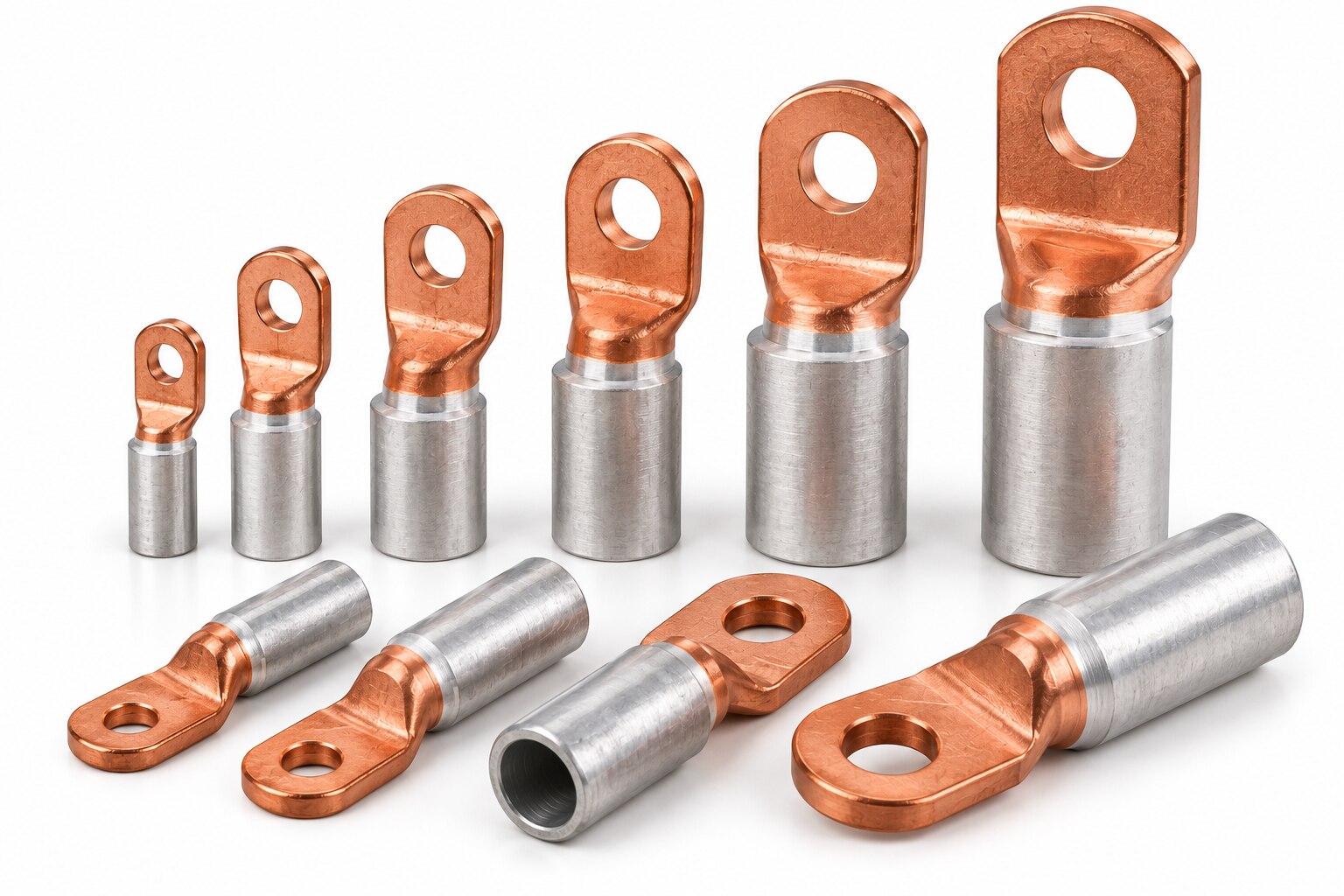
For an aluminium conductor copper busbar arrangement, use either a listed AL/CU lug or a true bimetallic lug with an aluminium barrel joined to a copper palm. NEC 110.14 requires the terminal, splice or connector to be identified for the conductor material, temperature rating and ampacity.
| Connection and terminal | Correct choice | Why |
|---|---|---|
| Copper conductor to copper busbar | Standard copper lug | Matching metals avoid a material transition |
| Aluminium conductor to aluminium terminal | Listed aluminium lug | Use the conductor range, temperature and installation markings |
| Aluminium conductor to copper terminal | Listed AL/CU terminal or bimetallic lug | The marking must approve the direct material combination |
A dual-rated AL/CU lug is not automatically bimetallic. Some use a plated aluminium body approved for both conductor materials; choose that design when its listing covers the conductor and copper landing surface. Use a bimetallic lug when the listing demands a separate copper contact section.
Moisture, heat and electrolytes increase galvanic-corrosion risk at direct aluminium-copper contact, but moisture alone does not make every connection require bimetal construction. A copper-only lug cannot accept an aluminium conductor merely because it fits. Check the lug marking and installation instructions for conductor material, strand class, range and approved equipment pad before ordering.
Identify the metals and understand the corrosion path
Confirm the connection from the equipment records and the markings on the parts, not from colour alone. Aluminium conductors often have “AL” on the cable jacket or an aluminium identification print; copper conductors may carry “CU” marking. A silver-coloured busbar or terminal might be plated copper, aluminium, or another finish.
Use these checks before selecting the termination:
- Read the cable jacket, conductor reel record, or manufacturer datasheet to confirm metal, size, strand class, and temperature rating.
- Inspect the landing surface and equipment drawings. A copper busbar or copper equipment terminal may be identified by the assembly documentation, not by appearance.
- Apply terminal marking identification: read the lug or terminal for “CU,” “AL,” or “AL/CU,” its conductor range, and its listing for the intended landing surface. Under NEC 110.14, a lug marked only CU cannot accept an aluminium conductor.
Galvanic corrosion begins when dissimilar metals touch and moisture creates an electrolyte between them. Copper is more noble than aluminium, so the aluminium becomes the metal that gives up material; its aluminium oxide film can increase contact resistance as the joint loosens or heats.
Direct copper-to-aluminium contact increases the active interface, while water, condensation, salt, and chemical residue keep the corrosion cell working.
A bimetallic transition reduces direct contact, but it does not make a wet or contaminated installation safe. Check the enclosure, sealing, plating, and environmental listing for the actual location.
Match the connector to the conductor, terminal and installation
Compare the conductor, landing surface and termination method as one assembly; a bimetallic lug is not automatically the best answer. A dual-rated AL/CU lug can use plated aluminium rather than a copper palm, so inspect the actual marking and listing instead of relying on the word “dual-rated.”
| Option | What to verify | When it applies |
|---|---|---|
| Bimetallic lug | Aluminium barrel, copper palm, marked conductor range, strand class and AL/CU suitability | Aluminium conductor on a copper busbar or equipment terminal when no single-metal terminal is listed for that combination |
| Plated copper lug | Conductor material approval; plating does not prove aluminium compatibility | Copper conductor on a copper landing surface, or aluminium only when the lug is explicitly marked and listed AL/CU |
| Aluminium lug | Aluminium conductor approval and compatibility with the landing pad | Aluminium-to-aluminium termination using an approved interface |
| Copper lug | CU marking, conductor range and terminal material | Copper conductor on copper equipment; a CU-only lug cannot accept aluminium |
| Splice barrel | Whether it joins conductors rather than lands on equipment, plus material and transition markings | Cable-to-cable splicing, not direct termination on a busbar |
| Transition busbar | Copper and aluminium pad locations, torque data, insulation and current rating | Fixed equipment that provides the metal transition instead of a lug |
Include voltage, temperature and ampacity limits in the copper lug comparison. NEC 110.14(C) can restrict the usable ampacity at the terminal even when the connector carries a 90°C marking. Dollex Control Panel Accessories can quote the selected lug against the conductor, pad and installation drawing; request those details before ordering.
Related products
 | Dollex Bimetallic Lugs are specialized electrical connectors designed for reliable joining of copper and aluminum conductors. View product → |
 | Dollex Copper and Aluminium Barrels are premium-quality connectors designed for efficient electrical cable termination and joining. View product → |
Prepare and crimp the lug according to its instructions
A reliable termination starts with the lug manufacturer’s installation sheet, not with the conductor size alone. Confirm that the lug covers the aluminium cable’s class, strand construction and dimensions before cutting.
1. Measure the specified strip length and remove insulation without nicking strands. Perform oxide removal only as instructed: brush or abrade the exposed aluminium with the approved tool, then keep it clean until insertion.
2. Apply joint compound only when the exact lug instructions require it, and use the named compound if one is specified. Some connectors arrive pre-filled or are listed without added inhibitor; an incompatible compound can interfere with crimping, sealing or the listing.
3. Insert every strand fully to the stated conductor-insertion depth. Do not force an oversized conductor or leave strands outside the barrel.
4. Use the specified compression tool, die code, crimp count and sequence. Hydraulic pressure alone does not prove a correct crimp; the wrong die can leave a loose, high-resistance joint.
5. Check the barrel for complete die impressions, cracks, strand escape and the correct palm orientation. Remove excess compound only as the instructions direct, then torque the connection hardware to the stated value.
Seal the finished termination against moisture with the specified insulating or sealing method, while keeping contact surfaces and inspection marks visible where required. Do not paint, file or add washers that the instructions do not permit.
A loose crimp, trapped oxide or water entry can produce heating and corrosion even when the lug appears mechanically secure.
Verify markings, ratings and environmental suitability before energising
Energise only after the connector’s marking, certification and installation limits match the actual conductor, terminal and environment. Under NEC 110.14, verify that the termination is identified for aluminium or copper conductors, the applicable conductor temperature rating, and the circuit’s ampacity. A lug marked CU only is not acceptable for an aluminium conductor.
Check these records and inspection points:
- Read the lug certification or listing, manufacturer’s installation sheet and crimp-tool requirements; confirm conductor range, stranded-conductor class, voltage rating and approved installation method.
- Confirm the equipment terminal or busbar material, plating and marking. Verify that the landing surface is copper, aluminium or specifically identified for AL/CU use.
- Compare the stated operating temperature with the equipment terminal rating. NEC 110.14(C) can limit allowable ampacity at the termination, even when the lug accepts a 90°C conductor.
- For international installations, review IEC 61238-1 classification, test scope and the manufacturer’s conductor and installation limits. Add the UL or CSA listing required by the installation jurisdiction.
- Before energising, inspect the lug for cracks, distortion, exposed strands, wrong die marks, loose hardware and contact with moisture. Confirm the finished joint has the specified cover, seal or enclosure protection.
| Evidence | Accept when | Reject when |
|---|---|---|
| Terminal marking | Names the conductor metals and applicable voltage and temperature | It says only CU, or omits conductor material |
| Certification document | Covers the selected size, class and installation method | It covers a different connector or test scope |
| Environment | Temperature, moisture and enclosure conditions stay within stated limits | Corrosion, heat or water exceeds the manufacturer’s limits |
Frequently asked questions
When is a bimetallic lug required for an aluminium-to-copper connection?
Use one when an aluminium conductor lands on a copper busbar or terminal and the connector is not listed for direct aluminium-to-copper contact.
Why can aluminium-to-copper connections corrode?
Direct contact between aluminium and copper can create a galvanic corrosion path, while aluminium’s oxide layer can increase contact resistance.
How do you choose the correct bimetallic lug?
Match the lug to the conductor material and size, terminal material and geometry, crimping system, current rating, voltage rating and installation environment.
What must you verify before energising the connection?
Check the lug markings, conductor insertion, crimp position, die code, torque, insulation clearance, sealing and suitability for temperature, moisture and corrosion exposure.